The Evolution of Simorgh: Re-forming Collective Identity
"Simorgh in the 21st Century," serves as an imagined contemporary follow-up to Farid ud-Din Attar’s 1177 Persian masterpiece, "Conference of the Birds." In classical Iranian mythology, the Simorgh is a benevolent hybrid healer. In Attar's Sufi text, the word Simorgh literalizes as thirty (si) birds (morgh), revealing that the divine protector the birds seek is actually the realization of their own collective unity.
For the modern Iranian diaspora, this project serves as a vital framework for cultural healing, transforming experiences of displacement into opportunities for shared restoration. Rather than dwelling on historical fragmentation, "Simorgh in the 21st Century" literalizes the process of cultural reclamation. By inviting seven distinct diaspora storytellers—each specifically anchoring one of the seven spiritual valleys of the Sufi path (Quest, Love, Knowledge, Detachment, Unity, Wonderment, and Poverty/Nothingness)—the project builds a focused, sequential collective framework. This collaboration directly mirrors the core philosophy of Saadi Shirazi’s "Bani Adam"—the understanding that humans are limbs of one interconnected body. The project celebrates the endurance of cultural identity. By transforming individual vulnerabilities into a synchronized artistic community through these seven transformative stages, the work demonstrates how a dispersed culture reforms, reclaims its heritage, and heals as one.
Stories about a large flying creature span 8000 years.
She is called Zhū Quèin in China, Suzaku in Japan, Jujak in Korea, Chu Tước in Vietnam,
Pheonix in Europe
The Greek have the Griffin, who is comparable to Homa of the Persians.
In our story she is called Simorgh. In the sacred book of Zoroastrians, she is described as having the head and wings of an eagle, the body of a lion and tail of a peacock.
Over time, and across cultures there were many variants
In the 12th century As our relationship to the Devine changed, so did our image of Simorgh.
But no matter when, where or what, and called by any other name, she is always BEAUTIFUL and BENEVOLENT, able to heal man and purify nature with her magical tail feathers.
The Vermilion Bird of the Chinese Constalation with 5 colors in its plumage represented fire. It is known as Zhū Què in Chinese, Suzaku in Japanese, Jujak in Korean and Chu Tước in Vietnamese.
Fenghuang, the mythological birds of East Asia, are hybrid creature who reign over all other birds. It may have the beak of a rooster, the face of a swallow, the forehead of a fowl, the neck of a snake, the breast of a goose, the back of a tortoise, the hindquarters of a stag, the tail of a fish, the head of a golden pheasant, the body of a mandarin duck, the tail of a peacock, the legs of a crane, the mouth of a parrot, and the wings of a swallow.
The Byzantine Phoenix would crash into the fire to be reborn anew.
The Griffin of the Greek -Roman mythology is comparable to Homa of the Persians.
Simorgh is the mythical hybrid creature of Iranian mythology. In the Avestan, the sacred book of Zoroastrians, she is described as having the head and wings of an eagle, the body of a lion and tail of a peacock. Over time, and across cultures there were many variants.
In the 12th century, in Conference of the Birds, Sufi poet Attar describes Simorgh as the sought after leader of all birds. But in a twist that teaches the path to Sufi enlightenment the birds find what they seek but never see her.
Instead, the reader learns that the divine they seek is all around them, and in them. And so, the popular image of Simorgh now is a flock of 30 birds. Attar reveals the pun that is her name, as Si means 30 and Morgh means bird in Persian.
But no matter when, where or what, and called by any other name, she is always BEAUTIFUL and BENEVOLENT, able to heal man and purify nature.
Fauth has argued that all the mythical giant birds—such as Simorḡ, Phoenix, Garuḍa, the Tibetan Khyuṅ, and also the Melek Ṭāʾus of the Yezidis—are offshoots of an archaic, primordial bird that created the world. Thus Simorḡ as God in Persian mysticism would, curiously, represent a return to the original meaning.
This, I suspect, explains the the wings on the primary and most common symbol of one of the first monotheists, Zoroastar.
Note: Anomaly
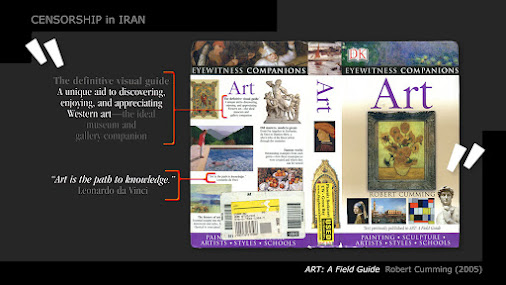
A human-bird hybrid, painted in Europe in the 15th century, Bellini ignores all historic representations including its gender.
5 centuries later American painter Robert Rauschenberg's uses it in one of his prints. This Xerox of a painting, a copy of a copy, is the only version included in the Richard Cumming's popular Art Field Guide, making it the Mother Ship to arm-chair art historians.
Returning to Iran after 1979, the bosomed Simurgh is deemed non-Islamic by decree of the Ministry of Culture in the Islamic Republic. The black marker of the censors makes this version more like its original.
Personal Significance:
During the Achaemenid era, Simourg protect against secret slander. So I carry the 500 rial coin with Simorgh on it.
The Evolution of Simorgh: Re-forming Collective Identity
"Simorgh in the 21st Century," serves as an imagined contemporary follow-up to Farid ud-Din Attar’s 1177 Persian masterpiece, "Conference of the Birds." In classical Iranian mythology, the Simorgh is a benevolent hybrid healer. In Attar's Sufi text, the word Simorgh literalizes as thirty (si) birds (morgh), revealing that the divine protector the birds seek is actually the realization of their own collective unity.
For the modern Iranian diaspora, this project serves as a vital framework for cultural healing, transforming experiences of displacement into opportunities for shared restoration. Rather than dwelling on historical fragmentation, "Simorgh in the 21st Century" literalizes the process of cultural reclamation. By inviting seven distinct diaspora storytellers—each specifically anchoring one of the seven spiritual valleys of the Sufi path (Quest, Love, Knowledge, Detachment, Unity, Wonderment, and Poverty/Nothingness)—the project builds a focused, sequential collective framework. This collaboration directly mirrors the core philosophy of Saadi Shirazi’s "Bani Adam"—the understanding that humans are limbs of one interconnected body. The project celebrates the endurance of cultural identity. By transforming individual vulnerabilities into a synchronized artistic community through these seven transformative stages, the work demonstrates how a dispersed culture reforms, reclaims its heritage, and heals as one.
Narrative Form & Cultural Impact
The Artifact of Shared Perspective, Project Status, and Intended Impact
The aesthetic framework of Simorgh in the 21st Century repositions the scratch-animation medium as a tool for cultural preservation, historical dialogue, and profound emotional restoration.. In this piece, the seven storytellers guide the narrative through the progressive perspectives of the valleys, documenting a profound journey of return. The energetic, raw lines etched into the black film leader do not merely signify past ruptures; they represent the active, tactile trace of the artist reclaiming their narrative space. By layering these vibrant, hand-scratched animations over deconstructed and re-contextualized historical found footage, the project directly visualizes the synthesis of memory and modern diaspora life.
The project has achieved significant momentum and is poised for full execution. The current project status stands fully verified: technical testing for both the 3D modeled assets and the rotoscoped vintage film elements is complete, as is the detailed storyboard for the upcoming animation teaser. This solid foundation ensures structural continuity as the narrative moves into deep production.
The project is designed to engage and impact three distinct tiers of viewers:
Young, hyphenated Iranians born in English-speaking countries: This audience may not have encountered Attar’s masterpiece during their education, and those who did were likely restricted to severely abridged translations. This film offers them an uncompromised, structurally rich window into their literary heritage.
English-speaking hyphenated Iranians grappling with generational dislocation: For those who have felt untethered by the legacy of the 1979 revolution and subsequently traumatized by witnessing the continuous mistreatment of citizens inside Iran, this work provides a space for collective processing. It shifts their relationship to their homeland from one of passive distance to active, collaborative storytelling.
Deep-thinking English speakers worldwide: For individuals of any background walking a spiritual path of enlightenment, the sequential progression through the seven valleys offers a universal, visually arresting template for self-reflection.
STORYBOARD
Stories about Simorgh, the mythical flying creature, span 5000 years. She is beautiful, with the tail feathers of a peacock that are magical. She is inherently benevolent, able to heal man and to purify nature. And in stories of Sufi mysticism, she is devine.
But Life has not been easy.
She is burnt black from the constant barrage and plucked out of magical feathers.
Her patience with us, and her protective bubble from us, has worn thin.
No longer together, they fear the other.
Without empathy, all hope is lost.
Unless they transform their faults and reform as one.
TECHNIQUE
Technical Innovation & Methodology
Analog Metaphor and Digital Interconnection
This project introduces a novel animation methodology that bridges historical avant-garde cinema with modern computation, transforming a difficult and grueling manual task into an act of meditative, ritualized creation. I am deconstructing and expanding upon the camera-less, direct-to-film techniques pioneered by early animators like Len Lye. While Lye's hand-scratched 16mm frames in Free Radicals masterfully captured energetic motion, maintaining volume and repeatability by hand must have been an exhausting hurdle. To streamline this process, I utilize an 8-step pipeline that leverages procedural repeatability to achieve fluid, three-dimensional motion.
For the bilingual countdown, the rotating numbers are modeled, animated, and rendered in black and white within Maya, 3D software. Sequenced onto a Super 16mm template in Photoshop, vectorized in Silhouette Studio, and mechanically scored before being layered and colored by hand.
Crucially, the physical handling of the film leader acts as a metaphor for structural restoration. I am developing a custom embossing process that utilizes a 3D printer to fabricate form-fitted embossing folders. Stamping traditional cultural iconography directly into the film substrate to represent the progression through the seven spiritual valleys allows the medium itself to carry the weight of our shared history. The computer does not replace the human touch; rather, it provides the repeatable structure needed to weave seven distinct artistic contributions into a seamless visual continuum.
Inspired by Len Lye's rotating marks in Free Radicals (1959)
I developed a technique which takes advantage of modern technology.
Given the course look of Scratch film, the Birds may be represented by zoomorphic calligrams.
An Example of an animated calligram which uses the Arabic Alphabet
Amentü Gemisi Nasıl Yürüdü (1969)
Tonguç Yaşar, Turkey
trt: 3 min. 15 sec.
I will also be scratching found footage.
By deconstructing the film at the edit points,
I will re-construct the clips to tell the story of Simorgh in the 21st Century.
I will develop a process for embossing the film which utilizes a 3D printer for making custom, fitted embossing folders. This test uses off-the-shelf embossing folders.
The Direct to Film technique of Scratch Animation is in harmony the Simorgh's story, as it implies the birds themselves scratched the film as a document of this tragic event, and perhaps as a warning for mankind not to let history repeat itself.
SCRIPT
Bird Parliament by Farid ud-Din Attar translated by Edward FitzGerald first published in Letters and Literary Remains of Edward FitzGerald (William Aldis Wright, ed.) London and New York: Macmillan and Co. [1889] Scanned at sacred-texts.com, April 2007. Proofed and formatted by John Bruno Hare. This text is in the public domain in the United States because it was first published prior to January 1st, 1923. These files may be used for any non-commercial use provided this notice of attribution is left intact in all copies.
PHASE 2: COLLABORATION
At 4500 lines Attar's poem it is too long for one person to complete. I will ask 30 storytellers to each take on the representation of one bird., which they can make in any style and use the technique of their own choosing. This will emphasize the multicultural and inclusive nature of the story.
RECENT MEDIA starring Simorgh Simurgh boardgame
released June 2016 Simurg is a dragon. Developers Website Review by Board Game Geek
Simorgh Animation (2014) with animated Ebook (2016)
Listen to the professional reading of the poem in both languages.
Play a game to learn about the character design, and how the Arabic letters in the spelling of each bird name were used to give them form.
I am an Iranian-American who was born an American-Iranian—in Tehran in 1966, to an Iranian father and an American mother. The love and mutual respect within my bi-cultural family is a shield to the overt biases of the wider community—biases that were fueled in 1979 for 444+ days on the nightly news. I was one of the lucky ones, while Iranians in America were vilified, I was just ‘othered.' There is a strange kind of freedom in being overlooked. Its like being handed a invisibility cloak. With the resilience of a child, and later the naïve optimism of a teenager, I survived—and eventually thrived—by choosing alternative paths. These choices grew from my admiration for the communities I encountered—invisible communities made of people whose convictions were earned through perseverance and quiet resilience. It is within these unseen circles that I discovered the profound value of listening to voices that often go unheard. In doing so, I learned not to fear change, as it is inevitable—and often an opening for transformation. A researcher I met early in my career once told me I’m like the canary in the coal mine. I’ve come to understand that challenging social norms often comes at a personal cost. But I’ve also learned that the communities willing to embrace diversity and protect independent thinking are the ones most capable of transformation—and ultimately, of becoming stronger.
Kurosh ValaNejad has managed to stay an amateur - in love - my consistently changing the field in which he applies his 3D CG skills, Land Planning 1990, Architecture 1996, Feature Film & Experimental Animation , Artificial Intelligence & Virtual Reality , and most recently in Video Games & Interactive Media . From 2001-2016, as a lead artist and/or art director he helped researchers at USC advance remote learning and develop innovative Impact games on topics ranging from national & international politics to spiritual enlightenment . 8 pieces from The Ca and the Coup , his documentary videogame are in the Art of the Middle East collection of LACMA He was a key team member on projects funded by the National Science Foundation , National Endowment for the Arts & the Humanities . His emotionally evocative virtual environments feel real by avoiding the uncanny valley of the photo real. Excited by the emergence of a new convergence of the Cinematic & Performing arts, ValaNejad shifted his focus in 2013 to live performance. He returned to school and developed the Body Scrub device, a software and sensor that correlates Space & Time to spatialize animation. When used in site-specific installations, these virtual funhouse mirrors encourage spectators to become the spectacle. And on stage in multimedia performances, the device returns control of the audience experience to the performer who is present, rather than the media maker who is not. The first application of Body Scrub was acquired by The Strong National Museum of Play. The 30th was Gender ID, and his thesis project for an MFA (2018) in Animation & Digital Art from USC Schoo for Cinematic Arts. He is currently working with choreographer Stephen Hues on an adaptation for the stage .
"What would <name of legendary animator> do if they had a computer?"
Professor Lisa Mann CTAN 544; Introduction to the Art of Animation
I used the large plus sign (+) embosser of Parasite with Symbiotic Intentions (from the Bani Adam series) to emboss the film before I scratched it. This triggered all the ideas documented in this blog post.
ProfessorTrixy SweetvittalesCTAN 547; Animation Production
With her guidance and patience, I developed a new Scratch technique utilizing digital technology.